
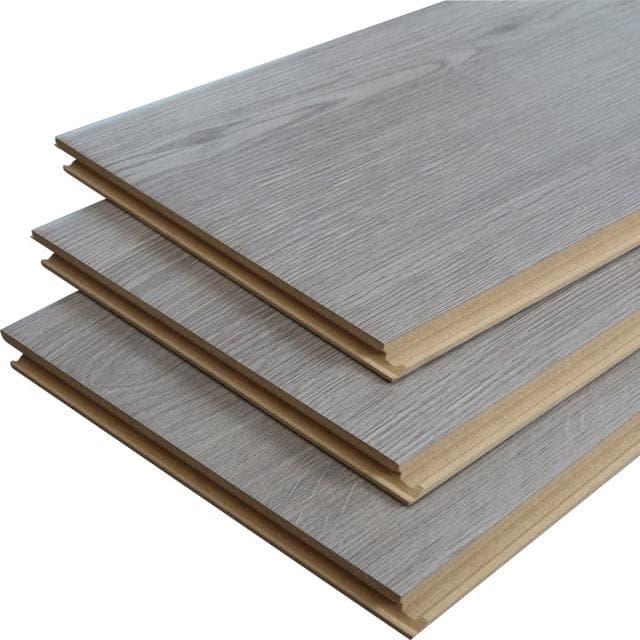
Engineered Wood Flooring
A real wood surface on a plywood base, in oak and walnut, with the stability that solid timber does not have.
Real wood on top
The surface is a solid timber layer, two millimetres and up, so the floor looks and wears like timber.
Stable base
The plywood base underneath balances the timber, which is why the floor moves less than solid wood.
Can be refinished
The timber layer is thick enough to sand and refinish more than once.
- Construction
- Plywood base with a solid timber surface layer
- Species
- White oak, red oak, European oak and walnut
- Width
- Wide boards up to about 9.5 in (240 mm)
- Surface
- Brushed, natural wood colour, matte
- Characteristics
- More stable than solid timber, and thick enough to be refinished more than once
- Joint
- Click lock as standard; glue-down or self-adhesive available
- MOQ
- 50–500 m²
Engineered wood is a real timber floor with a plywood base under it. The top layer is solid oak or walnut, two millimetres and up, so the surface looks and wears like timber, and it can be sanded and refinished more than once. Underneath, crossed layers of plywood balance the movement of the wood above them.
That construction is the point. Solid timber takes in and gives out moisture with the seasons, and a wide solid board can cup or gap as a result. The plywood base holds the surface layer in check, so the floor can be laid as a wide board and over a wider range of subfloors than solid wood allows.
Species run across white oak, red oak, European oak and walnut, with boards up to about 9.5 in (240 mm) wide, and surfaces finished brushed, natural or matte.
Tell us the species, the board width, the surface finish and the area, and we will quote the order.