
Sintered Stone, Flexible Stone & Composite Panel
Sintered stone slabs, flexible stone veneer and honeycomb backed panels, for surfaces where weight or curvature rules out a full slab.
Sintered stone
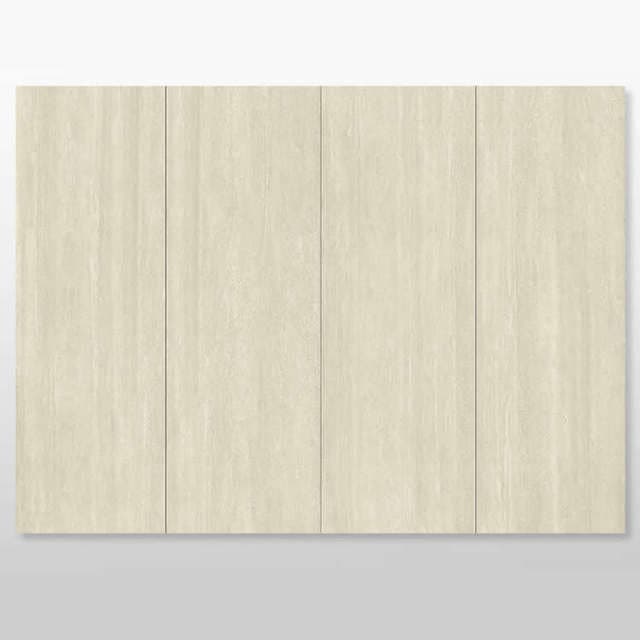
A pressed and fired slab that carries a stone pattern without the weight and the open surface of the natural stone it replaces.
Flexible stone
A thin veneer that bends, which is what allows a stone finish on a curved wall or column where a rigid slab cannot go.
Honeycomb backed panel
A thin stone face bonded to an aluminium honeycomb backing, which cuts the weight enough for high level work.
- Sintered stone size
- 1200 × 2700 mm as the common slab; 1200 × 2400 mm and 1600 × 3200 mm also available
- Sintered stone thickness
- 6 mm for cladding and door faces, 12 mm for countertops, 20 mm for project work and waterfall edges
- Sintered stone finish
- Matt, polished or a stone texture for surfaces where a travertine look is wanted
- Flexible stone
- Bends, is light in weight, resistant to salt spray and shock resistant; suits curved faces and high level exterior work
- Honeycomb composite panel
- A thin stone face on an aluminium honeycomb backing, bonded to cut weight for high level interior work
- Applications
- Curved and high level surfaces where a full slab is too heavy or will not follow the shape
- MOQ
- From 16 m² for sintered stone
This range covers three ways of getting a stone surface onto a job where a full slab will not work, and the reason in each case is weight or shape.
Sintered stone is a slab pressed and fired rather than quarried. It carries a stone pattern across a 1200 × 2700 mm panel, with 1200 × 2400 mm and 1600 × 3200 mm also available, and it is produced in 6 mm for cladding and door faces, 12 mm for countertops and 20 mm for project work and waterfall edges. Being thinner than a natural stone slab of the same face size, it is lighter, which matters on a wall or a door where the substrate is not carrying stone.
Flexible stone is a thin veneer that bends. That is what puts a stone finish on a curved wall, a column or an arched opening, where a rigid slab simply cannot follow the shape. It is also light, resistant to salt spray and shock resistant, so it works on high level exterior faces as well as indoors.
A honeycomb composite panel takes a different route to the same problem: a thin stone face is bonded to an aluminium honeycomb backing, which takes the weight out of the panel without giving up the stone surface. It suits high level interior work and the soffits and fascias a solid slab would overload.
Tell us the surface, the application, the size and the area, and we will quote the order.